
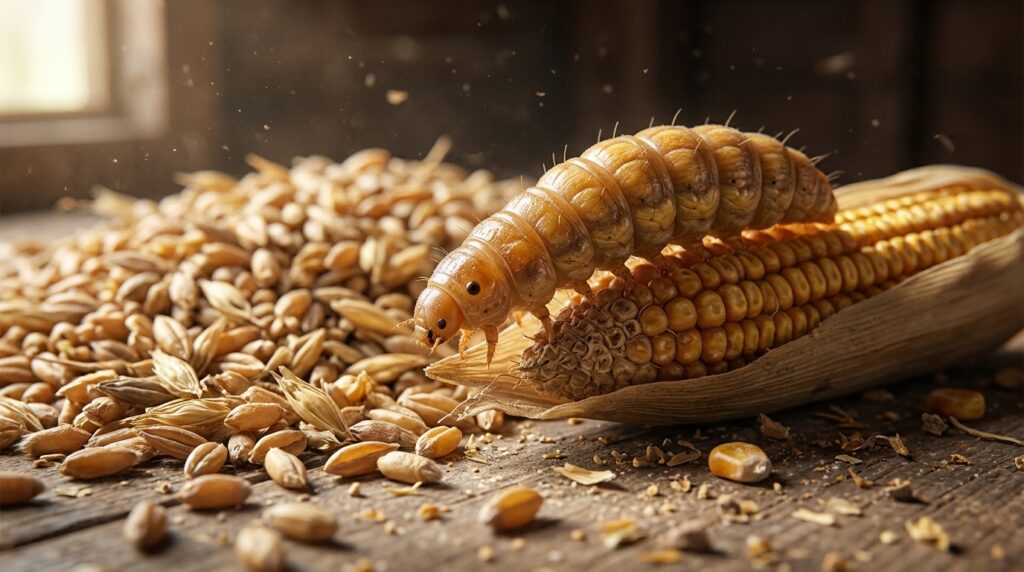

The term Kornwurm is a German word associated with insects that infest stored grain and cereal products. Although the name literally suggests a grain worm, it does not necessarily describe an actual worm. In agricultural and dictionary contexts, Kornwurm is commonly associated with the grain weevil and certain grain moth larvae that can damage wheat, barley, corn, and other stored food products.
Understanding what Kornwurm means is useful for farmers, grain storage operators, food businesses, and anyone interested in protecting stored grains from pests. These insects can reduce food quality, contaminate storage areas, and create problems when grain is kept under unsuitable conditions.
This guide explains the meaning of Kornwurm, its different forms, how grain pests develop, the signs of infestation, and practical ways to prevent grain damage.
What Is Kornwurm?
Kornwurm is a German term traditionally used for certain grain-damaging insects or their larval stages. The word is particularly associated with the grain weevil, a small insect that attacks stored cereal grains. In some German-language references, the term can also describe larvae of grain moths.
The word is important because it highlights a common issue in agriculture: insects can develop inside stored grain and remain difficult to notice until damage becomes more visible.
The black Kornwurm is generally associated with the grain weevil, while the white Kornwurm is associated with the grain moth. These names are traditional descriptions rather than precise scientific classifications for every insect that may appear in grain storage.
In English, related terminology includes grain weevil, grain moth, grain beetle, and stored-grain pest. The exact insect depends on the species and the context in which the word is used.
Kornwurm Meaning and German Language Origins
The German word Korn refers to grain, while Wurm means worm. Together, the words form Kornwurm, which can be translated approximately as grain worm.
Historically, grain pests were significant problems for households, farmers, merchants, and mills because grain was an essential food resource. Insects that damaged stored wheat and other cereals could affect the availability and quality of food.
The term has therefore remained connected with agricultural vocabulary, traditional grain storage, and discussions about insects that infest cereal products.
Today, Kornwurm may appear in German dictionaries, historical agricultural literature, pest identification resources, and translation searches. Readers searching for the word may be trying to understand a German term, identify a grain insect, or learn about food storage pests.
Types of Kornwurm
The word Kornwurm can refer to more than one type of grain pest. Understanding the distinction helps readers identify the likely insect and choose an appropriate prevention method.
Schwarzer Kornwurm
Schwarzer Kornwurm, meaning black grain worm, is commonly associated with the grain weevil. Grain weevils are small beetles that can infest stored cereal grains.
Adult grain weevils have elongated bodies and a distinctive snout. Their larvae develop inside individual grain kernels, making early detection challenging.
The insect can damage grain by feeding and developing within kernels. Infested grains may become hollow, weakened, or unsuitable for certain food and processing purposes.
Weißer Kornwurm
Weißer Kornwurm, meaning white grain worm, is associated with the larval stage of grain moths.
Unlike grain weevil larvae, which develop inside individual kernels, certain grain moth larvae may feed on grain products and produce silk-like webbing. This webbing can bind grain particles together and make an infestation easier to recognize.
The distinction between the black and white Kornwurm is useful when examining stored food products because different insects may leave different signs of damage.
How Kornwurm Insects Develop
Grain pests usually pass through several stages of development. The exact life cycle varies depending on the species, temperature, food availability, and environmental conditions.
1. Egg stage
Adult insects lay eggs on or within suitable food material. Grain weevils can deposit eggs inside grain kernels, making the eggs difficult to see during routine inspections.
2. Larval stage
The larvae develop while feeding on stored grain or grain products. In grain weevils, much of the larval development takes place inside the kernel.
Larvae are often pale or cream-colored, and their presence may not become obvious until the grain shows damage or adult insects emerge.
3. Pupal stage
After feeding and growing, the insect enters a pupal stage. During this period, it transforms into its adult form.
4. Adult stage
Adult insects emerge and may continue reproducing if environmental conditions and food supplies are suitable. A population can grow when grain is stored for extended periods without regular inspection.
The ability of certain pests to develop inside grain explains why a storage container may appear clean on the outside while insects are already present within the stored material.
How Kornwurm Damages Stored Grain
Kornwurm-related pests can cause several forms of grain damage.
Internal grain damage
Some insects develop inside kernels, consuming the material and reducing the grain’s structural integrity. Affected kernels may become lighter, hollow, or visibly damaged.
Reduced grain quality
Infestation can lower the quality of stored wheat, corn, rice, barley, and other cereals. Damaged grain may be less suitable for food production, milling, animal feed, or commercial sale.
Contamination
Insects, larvae, shed skins, droppings, and damaged grain can contaminate storage containers and surrounding products.
Increased storage problems
Infestations may contribute to additional storage concerns, particularly when grain is kept in warm, poorly ventilated, or inadequately maintained environments.
For businesses that handle grain commercially, these problems can lead to financial losses, rejected shipments, additional cleaning expenses, and concerns about food quality.
Common Signs of Kornwurm Infestation
Identifying an infestation early can help prevent further damage. The following signs are worth checking during grain storage inspections.
Small insects inside containers
Adult beetles or moths may be visible around grain bags, bins, cupboards, storage rooms, or processing equipment.
Holes in grain kernels
Grain weevils can leave small openings in kernels after development. A noticeable number of damaged grains may indicate an infestation.
Powdery material
Fine particles, grain dust, or damaged cereal material may accumulate near affected storage products.
Larvae in grain
Small pale larvae may be visible in heavily affected grain or grain products, depending on the insect species.
Webbing in stored products
Some grain moth larvae produce silk-like material. Webbing, clumped grain, or unusual threads can be signs of moth activity.
Unusual odor or deterioration
Stored grain should be examined if it develops an unusual smell, discoloration, moisture, or a change in texture. These conditions may indicate multiple storage problems, not necessarily Kornwurm alone.
Where Kornwurm Infestation Commonly Occurs
Grain pests are often associated with locations where cereals and food products are stored for extended periods.
Common areas include:
- Grain storage bins and silos
- Farm warehouses
- Flour mills
- Food processing facilities
- Pantry cupboards
- Grain bags and packaging
- Storage rooms containing rice, wheat, flour, or cereals
The risk of infestation increases when storage conditions allow pests to survive and reproduce. Poor cleaning practices, damaged packaging, moisture problems, and the introduction of already-infested grain can all contribute.
How to Prevent Kornwurm in Grain Storage
Prevention is generally more effective than dealing with an established infestation. Proper storage practices can reduce the likelihood of grain pests developing and spreading.
Keep storage areas clean
Remove spilled grain, dust, food debris, and residues from storage areas. Insects may survive in small amounts of leftover food material, even when the main grain supply has been removed.
Clean corners, cracks, shelves, equipment, and areas around storage containers regularly.
Inspect grain before storing it
Examine incoming grain for insects, damaged kernels, unusual odors, and signs of contamination. Avoid mixing questionable grain with clean supplies.
Use appropriate storage containers
Choose clean, suitable, tightly closed containers or storage systems. Containers should protect grain from insects, moisture, and unnecessary exposure to the surrounding environment.
Monitor moisture and temperature
Grain storage conditions play an important role in pest development and product quality. Follow suitable storage guidance for the specific cereal, storage system, and climate.
Keeping grain appropriately dry and monitoring storage conditions can help reduce pest activity and other deterioration problems.
Rotate stored grain
Use older supplies first when appropriate, and avoid storing grain for longer than necessary. Regular rotation helps reduce the time available for pests to establish large populations.
Perform regular inspections
Check stored grain and containers periodically. Look for insects, damaged kernels, webbing, unusual dust, and changes in the grain’s condition.
For large storage facilities, monitoring systems and professional inspection programs may be useful.
What to Do If You Find Kornwurm
If you suspect Kornwurm in stored grain, avoid spreading the infestation to other products.
First, separate the affected grain from unaffected supplies. Examine nearby containers and storage areas for insects or signs of damage.
Next, assess the extent of the problem. A small household infestation may require removing contaminated products and thoroughly cleaning the cupboard or storage container. Larger agricultural or commercial infestations may require professional pest management.
Do not assume that visibly removing insects makes the affected grain suitable for consumption. Infested grain may contain hidden larvae, insect fragments, waste, or other contamination.
When grain is intended for human consumption, animal feed, or commercial processing, follow relevant food safety requirements and obtain professional guidance when necessary.
Avoid applying pesticides directly to food or grain unless the product is specifically approved for that use and the application follows its label and applicable regulations.
Is Kornwurm the Same as a Grain Weevil?
Kornwurm and grain weevil are closely related terms in many German-English translation contexts, but they are not always interchangeable in every historical or biological reference.
The term Kornwurm is a common or traditional name. Grain weevil refers more specifically to a group of beetles that infest stored grains.
A grain weevil is not an actual worm. It is a beetle whose immature stage is larval. This is why common names can sometimes be confusing.
When accurate identification matters, scientific names and visible characteristics are more reliable than common names alone.
Why Grain Storage Protection Matters
Grain is an important source of food, animal feed, and raw material for numerous industries. Protecting it from insects helps maintain its quality from harvest through transportation, storage, and processing.
Stored-grain pests can create challenges for farmers, wholesalers, retailers, and household consumers. Small infestations may grow when conditions are favorable, while larger infestations can cause considerable product losses.
Modern grain management combines cleanliness, inspection, moisture control, appropriate storage, and monitoring. These practices help maintain food quality and reduce unnecessary waste.
Understanding terms such as Kornwurm also makes it easier to interpret agricultural information, research pest identification, and communicate about grain storage problems.
Frequently Asked Questions About Kornwurm
What is a Kornwurm?
Kornwurm is a German term associated with grain-damaging insects. It commonly refers to the grain weevil or, in some contexts, the larva of a grain moth.
Is Kornwurm a beetle or a worm?
The term may describe a beetle-related grain pest or a moth larva. The black Kornwurm is associated with the grain weevil, which is a beetle. The white Kornwurm is associated with grain moth larvae.
What is the difference between black and white Kornwurm?
The black Kornwurm is commonly linked to the grain weevil, while the white Kornwurm is linked to the grain moth. Their appearance, life cycle, and damage patterns can differ.
How does Kornwurm damage grain?
Grain pests may feed on kernels, develop inside grain, contaminate stored products, and reduce grain quality. Some moth larvae also create webbing in stored food material.
How can Kornwurm infestation be prevented?
Prevention includes keeping storage areas clean, inspecting grain before storage, using appropriate containers, monitoring moisture and temperature, rotating supplies, and regularly checking for insects.
Is grain affected by Kornwurm safe to eat?
Grain showing signs of infestation should not automatically be considered safe. Insects and their residues may contaminate stored food. For human consumption, follow food safety guidance and discard contaminated products when appropriate.
Conclusion
Kornwurm is a German term connected with grain pests, especially the grain weevil and certain grain moth larvae. Although the word suggests a worm, it may describe insects that have different life cycles and feeding behaviors.
Recognizing the meaning of Kornwurm, understanding the difference between related pests, and identifying early signs of infestation can help protect stored grain and food products.
Good storage hygiene, regular inspection, suitable environmental conditions, and proper pest management remain essential for reducing grain losses. Whether the term appears in a dictionary, agricultural article, or pest identification guide, understanding Kornwurm provides useful insight into the challenges of storing and protecting cereal grains.