
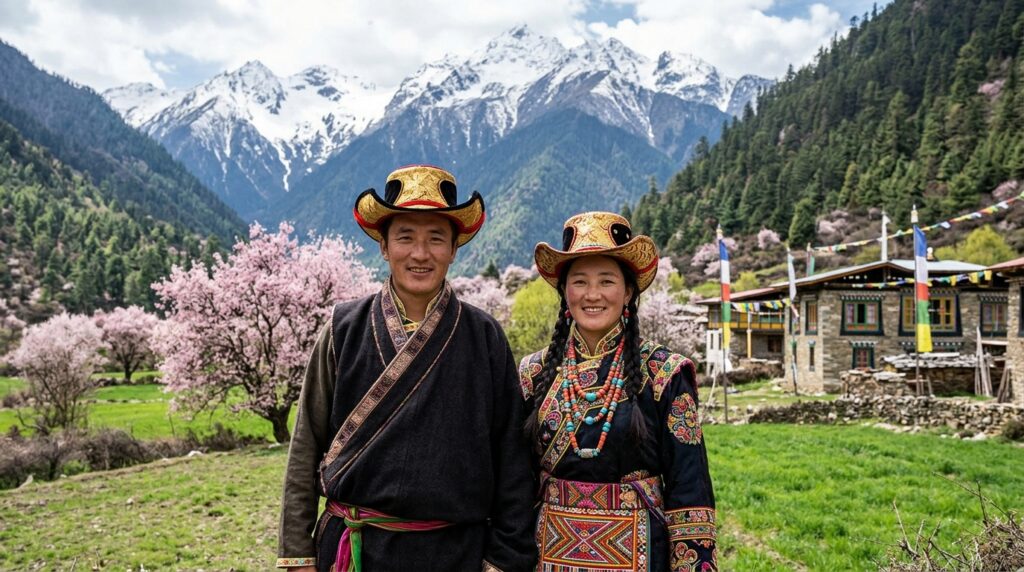

Kongpo is a historically significant cultural and geographical region in southeastern Tibet, known for its distinctive Tibetan traditions, beautiful landscapes, rich history, and connection to the wider Himalayan world. Often associated with the modern Nyingchi area of the Tibet Autonomous Region in China, Kongpo represents an important part of Tibet’s cultural diversity.
Unlike the high, dry landscapes commonly associated with the Tibetan Plateau, Kongpo is recognized for its comparatively green valleys, forested mountains, flowing rivers, and agricultural surroundings. Its natural environment has influenced local lifestyles, traditional occupations, architecture, and cultural practices for generations.
The region is also important for understanding Tibetan history. Its communities have maintained distinctive customs, religious traditions, and regional identities that contribute to the broader cultural heritage of Tibet.
Whether someone is researching Tibetan geography, exploring Himalayan history, learning about traditional festivals, or discovering lesser-known cultural destinations, Kongpo offers an interesting subject worth understanding.
What Is Kongpo?
Kongpo, also written as Kong Po, is a traditional Tibetan geographical and cultural region in southeastern Tibet. Its Tibetan name is ཀོང་པོ་, and it is also represented by the Chinese name Gongbu.
Historically, Kongpo referred to an area associated with the valleys and settlements around the Nyang River and the surrounding mountainous landscape. Today, the name is connected with parts of the Nyingchi region, including areas around modern Gongbo’gyamda County.
Kongpo is not simply a geographical designation. It also represents a regional cultural identity shaped by language, history, religious beliefs, local customs, and relationships with the natural environment.
The people associated with this region are sometimes described as Kongpo people or Kongpowa. Their traditions form an important part of the wider Tibetan cultural landscape.
Geographical Location of Kongpo
Kongpo is located in the southeastern part of the Tibetan Plateau, within the broader Himalayan region. Its geographical position makes it particularly interesting because the surrounding environment differs considerably from the colder and more arid areas of central and western Tibet.
The region is associated with Nyingchi, an area known for its mountains, valleys, rivers, forests, and relatively mild conditions compared with many other parts of the plateau.
One important geographical feature is the Nyang River, which flows through the wider region and connects with the Yarlung Tsangpo River system.
The landscape includes several distinctive natural features:
- Mountain ranges with dramatic elevations.
- Green valleys and agricultural settlements.
- Forested hillsides and alpine vegetation.
- Rivers and smaller waterways.
- Traditional villages surrounded by natural scenery.
- Mountain slopes supporting diverse plant and animal life.
These geographical characteristics have helped shape the region’s historical development and traditional economy.
The Historical Background of Kongpo
Kongpo has a long history connected to the development of Tibetan civilization. Before modern administrative boundaries were established, Tibet was understood through several cultural and historical regions, each with its own communities, traditions, and political relationships.
Kongpo was one of the historically recognized regions of southeastern Tibet.
Historical accounts associate the area with traditional Tibetan religious institutions, local rulers, monasteries, and communities that maintained relationships with neighboring regions.
Its location also made it significant for movement between central Tibet and southeastern areas. Travelers, religious teachers, traders, and pilgrims passed through different parts of this mountainous landscape.
Kongpo’s historical importance is therefore connected to more than its physical geography. It also reflects the movement of ideas, religious teachings, trade, and cultural practices across the Tibetan Plateau.
Kongpo in Traditional Tibetan History
Traditional Tibetan history recognizes numerous regional identities, including Kongpo, Powo, and Dakpo in the southeastern cultural landscape.
These regions developed distinctive local characteristics while remaining connected to broader Tibetan religious and political traditions.
Kongpo’s identity was influenced by its geographical position, local leadership structures, Buddhist institutions, and interactions with neighboring communities.
Historical religious literature also mentions Kongpo as an important destination for Buddhist teachers and practitioners.
This historical background helps explain why the region continues to attract interest from researchers studying Tibetan history and cultural geography.
Natural Beauty and Landscape of Kongpo
One of the most interesting aspects of Kongpo is its natural environment.
Many people imagine Tibet primarily as a region of enormous dry plateaus, snow-covered mountains, and extremely cold conditions. Although these landscapes are important parts of Tibetan geography, southeastern Tibet offers a different visual experience.
Kongpo is associated with comparatively green valleys, wooded mountain slopes, rivers, and agricultural land.
Mountain Landscapes
The mountains surrounding Kongpo contribute significantly to its natural identity. Their elevations create different ecological conditions, allowing various types of vegetation to grow at different altitudes.
Some areas feature thick forests, while higher elevations support alpine vegetation and colder mountain environments.
These landscapes also influence traditional settlement patterns because communities have historically developed around accessible valleys and suitable agricultural areas.
Rivers and Water Resources
Water plays an important role in the geographical and economic life of Kongpo.
The Nyang River is a major geographical feature associated with the region. Its relationship with the larger Yarlung Tsangpo River system connects Kongpo to one of the most important river networks in the Himalayan region.
Rivers provide water for agriculture, support surrounding ecosystems, and contribute to the development of settlements.
The presence of waterways also influences local scenery, creating attractive combinations of mountain valleys, riverbanks, and forested surroundings.
Forests and Biodiversity
Southeastern Tibet is known for its ecological diversity.
The changing elevation and climatic conditions create habitats for different plants, trees, and wildlife. Forested areas are particularly important because they contribute to soil protection, water regulation, and regional biodiversity.
The natural environment is also connected to local cultural traditions. For many communities, mountains, rivers, forests, and other natural features hold both practical and spiritual significance.
Kongpo Culture and Traditional Lifestyle
Kongpo’s cultural identity is closely connected to Tibetan traditions, but its local customs also reflect the distinctive environment and history of southeastern Tibet.
Traditional lifestyles developed through a combination of agriculture, animal husbandry, religious practices, community relationships, and regional trade.
Although modern development has changed many aspects of daily life, traditional cultural expressions remain important to regional identity.
Traditional Clothing
Traditional clothing is an important part of Tibetan cultural heritage.
In Kongpo and surrounding areas, clothing traditions have historically reflected local climate, available materials, occupation, and social customs.
Traditional Tibetan garments often feature practical designs suitable for changing mountain temperatures.
Depending on the occasion, people may wear traditional robes, decorative accessories, and regionally distinctive garments during cultural celebrations and community gatherings.
Clothing can also communicate regional identity and cultural continuity.
Traditional Food
Food in Kongpo reflects the agricultural resources and culinary traditions of southeastern Tibet.
Traditional Tibetan cuisine commonly includes ingredients such as barley, dairy products, vegetables, meat, and locally available crops.
Some familiar elements of Tibetan food culture include:
- Tsampa, a traditional roasted barley flour preparation.
- Butter tea, a well-known Tibetan beverage.
- Tibetan barley-based foods.
- Dairy products such as butter and cheese.
- Meat dishes prepared according to local traditions.
- Regional vegetable and grain preparations.
Food is more than a source of nutrition. It also plays a role in hospitality, family gatherings, religious occasions, and community celebrations.
Agriculture and Animal Husbandry
Agriculture has traditionally been an important part of life in Kongpo.
The region’s relatively favorable environmental conditions in certain valleys support the cultivation of different crops. Farming practices have developed around local soil conditions, water availability, seasonal weather, and elevation.
Animal husbandry is another traditional economic activity in Tibetan communities.
Livestock can provide milk, meat, wool, and other resources. The combination of farming and animal husbandry has historically supported household economies and local food systems.
Kongpo Losar: A Distinctive Tibetan New Year Celebration
One of the most fascinating cultural traditions associated with Kongpo is Kongpo Losar.
Losar is the Tibetan New Year, an important celebration that marks the beginning of a new year according to the Tibetan calendar.
However, Kongpo Losar is distinctive because some communities in the Nyingchi area celebrate their New Year during the tenth month of the Tibetan calendar rather than following the more widely observed New Year timing.
This tradition reflects the region’s historical and cultural identity.
The Story Behind Kongpo Losar
According to a popular local legend, a Kongpo ruler once ordered his soldiers to prepare for military conflict during the tenth month of the Tibetan calendar.
To allow people to celebrate before the soldiers departed, the ruler encouraged the community to observe the New Year earlier than usual.
The tradition is remembered as a way of honoring the courage and sacrifices of those who defended their homeland.
Although this account is part of local tradition rather than a universally established historical explanation, it provides an interesting insight into how communities preserve their collective memories through festivals.
Kongpo Losar Celebrations
Kongpo Losar is associated with several cultural activities.
Depending on the community and local customs, celebrations may include:
- Traditional Tibetan songs and music.
- Folk dances and cultural performances.
- Horse racing competitions.
- Archery activities.
- Family gatherings and festive meals.
- Community celebrations and social exchanges.
- Traditional beverages and local foods.
One particularly distinctive custom involves offering food to a dog during New Year’s Eve.
According to local beliefs, the food selected by the dog can symbolically indicate different aspects of the coming year, such as agricultural prosperity, livestock health, and family happiness.
This custom demonstrates how traditional beliefs, animals, food, and seasonal celebrations can become connected within a local cultural tradition.
Religion and Spiritual Heritage in Kongpo
Tibetan Buddhism has played an important role in the cultural development of Kongpo.
Monasteries, religious teachers, sacred places, and spiritual traditions have contributed to the region’s historical identity.
Buddhist institutions have traditionally served as centers of religious education, community activities, cultural preservation, and spiritual practice.
Religious teachings have also influenced local art, architecture, festivals, literature, and everyday customs.
Monasteries and Religious Traditions
Kongpo has historical connections with several Tibetan Buddhist religious sites.
Kongpo Drula Gonpa is associated with the region’s religious heritage and is described in regional accounts as an important monastery.
Monasteries traditionally provide places for prayer, meditation, religious instruction, and the preservation of Buddhist knowledge.
They can also serve as cultural landmarks that connect present-day communities with earlier generations.
Sacred Mountains and Natural Places
In Tibetan Buddhist culture, natural landscapes can have spiritual significance.
Mountains, rivers, lakes, and forests may be associated with sacred stories, local protective traditions, and pilgrimage practices.
Such beliefs influence how communities understand their relationship with the natural world.
In Kongpo, the connection between the environment and religious identity contributes to the region’s distinctive cultural character.
Language and Regional Identity
Language is another important element of Kongpo’s cultural heritage.
Tibetan is the principal cultural and linguistic reference point for understanding the region, although local speech varieties and linguistic characteristics can differ across southeastern Tibet.
Regional identity is shaped by more than language alone. Historical memories, family traditions, local customs, religious institutions, and geographical connections all contribute to how communities understand their origins.
The term Kongpo therefore carries cultural meaning beyond its use as a place name.
It connects people to a particular historical landscape and a shared collection of regional traditions.
Traditional Architecture and Villages
Traditional settlements in Kongpo reflect the relationship between people and their surrounding environment.
Historically, homes and village structures were developed according to available building materials, local weather, geographical conditions, and household needs.
Traditional Tibetan architecture is known for practical construction methods and distinctive decorative features.
Buildings may incorporate stone, wood, earth, and other locally available materials.
Village layouts often reflect agricultural requirements and the importance of community relationships.
Religious buildings, prayer spaces, and traditional household features can also contribute to the cultural appearance of settlements.
These architectural traditions provide valuable information about how communities adapted to their environment over time.
Economy and Modern Development
The economy of Kongpo has traditionally been connected to agriculture, livestock, local trade, and natural resources.
However, modern infrastructure and economic development have changed the opportunities available to communities in the wider Nyingchi area.
Road networks, transportation improvements, public services, education, and tourism have contributed to changing regional lifestyles.
Agriculture
Farming continues to be an important part of the regional economic landscape.
Agricultural activities depend on local geography, water availability, climate, and seasonal conditions.
Different valleys support different crops, while livestock remains relevant to many traditional rural households.
Tourism
The wider Nyingchi region has become increasingly interesting to travelers because of its natural scenery and cultural attractions.
Visitors are drawn to its mountain landscapes, forests, rivers, traditional villages, and Tibetan cultural experiences.
Kongpo’s historical identity adds another dimension to the area’s tourism appeal.
Responsible tourism can support local businesses while encouraging greater appreciation of cultural heritage and environmental conservation.
Modern Infrastructure
Improvements in transportation and public infrastructure have made different parts of southeastern Tibet more accessible.
These developments influence education, trade, communication, tourism, and access to services.
At the same time, preserving traditional culture remains an important consideration as communities adapt to modern economic and social conditions.
Kongpo and Its Importance in Tibetan Cultural Geography
Tibet contains several historical and cultural regions with different geographical characteristics and regional identities.
Kongpo is particularly interesting because it represents the cultural and environmental diversity of southeastern Tibet.
Its comparatively green landscape differs from the more arid areas commonly associated with the Tibetan Plateau.
Its historical connections with Buddhism, traditional regional communities, and distinctive celebrations also contribute to its importance.
Understanding Kongpo provides a broader perspective on Tibetan identity.
It reminds us that Tibetan culture is not limited to one landscape, one dialect, or one set of customs. Instead, it includes many regional traditions shaped by centuries of geographical, religious, and historical development.
Best Time to Explore the Kongpo Region
The wider Nyingchi area experiences seasonal variations that influence travel conditions and natural scenery.
Spring can bring blooming vegetation and attractive mountain landscapes. Summer is generally associated with greener surroundings and more active vegetation, although rainfall can affect travel conditions.
Autumn often offers appealing scenery, changing foliage, and comparatively comfortable conditions in some locations.
Winter brings colder temperatures, particularly at higher elevations, and may affect access to certain mountain routes.
The best time to visit depends on the intended activities, travel arrangements, weather conditions, and local access requirements.
Travelers should check current regional regulations and transportation information before planning a visit.
Why Kongpo Is Worth Learning About
Kongpo deserves attention for several reasons.
First, it provides an opportunity to explore a distinctive part of Tibetan geography. Its valleys, rivers, and forested mountain environments offer an alternative perspective on the Tibetan Plateau.
Second, its cultural traditions help explain the diversity of Tibetan identity. Local clothing, food, religious practices, and festivals demonstrate how communities develop distinctive customs within a broader cultural tradition.
Third, its historical background connects the region to wider Tibetan religious and political developments.
Finally, Kongpo Losar offers an especially interesting example of how regional communities preserve their traditions through unique celebrations and shared stories.
For students, researchers, cultural enthusiasts, and travelers, the region offers many opportunities for learning and exploration.
Frequently Asked Questions About Kongpo
1. What is Kongpo?
Kongpo is a traditional geographical and cultural region in southeastern Tibet, associated with the modern Nyingchi area of the Tibet Autonomous Region in China.
2. Where is Kongpo located?
Kongpo is located in southeastern Tibet. Its historical geographical identity is associated with areas around the Nyang River and present-day Gongbo’gyamda County.
3. What is Kongpo famous for?
Kongpo is known for its Tibetan cultural heritage, green valleys, mountain landscapes, historical religious traditions, and distinctive Kongpo Losar celebration.
4. What is Kongpo Losar?
Kongpo Losar is a regional Tibetan New Year celebration observed by some communities in the Nyingchi area during the tenth month of the Tibetan calendar.
5. Why is Kongpo Losar celebrated earlier?
According to a popular local legend, a historical Kongpo ruler arranged an earlier New Year celebration so soldiers could celebrate before departing for battle. The tradition is associated with remembering their courage and sacrifice.
6. What language is spoken in Kongpo?
Tibetan is central to the region’s cultural identity. Local linguistic varieties may differ from those spoken in other parts of Tibet.
7. Is Kongpo a historical region?
Yes. Kongpo has a long-standing identity in Tibetan historical and cultural geography. It was recognized as a distinct region before the establishment of modern administrative boundaries.
8. What river is associated with Kongpo?
The Nyang River is an important river associated with the historical Kongpo region. It is part of the wider Yarlung Tsangpo River system.
9. Is Kongpo suitable for cultural tourism?
The wider region offers opportunities to explore Tibetan cultural traditions, historical religious sites, traditional settlements, and natural scenery. Travel arrangements should account for local regulations and accessibility.
10. What makes Kongpo different from other Tibetan regions?
Its combination of comparatively green landscapes, distinctive regional traditions, historical identity, and the early celebration of Kongpo Losar makes it particularly interesting.
Conclusion
Kongpo is an important part of southeastern Tibet’s geographical, historical, and cultural landscape. Its green valleys, mountain environments, rivers, traditional settlements, and Buddhist heritage provide a fascinating perspective on the diversity of Tibetan civilization.
The region’s distinctive customs, especially Kongpo Losar, demonstrate how local communities preserve their history and identity through festivals, stories, and shared cultural practices.
Beyond its natural beauty, Kongpo represents a connection between geography, spirituality, history, and everyday life. Learning about this region helps develop a deeper understanding of Tibet and the many cultural traditions that make its different communities unique.
For anyone interested in Himalayan geography, Tibetan history, cultural heritage, or traditional festivals, Kongpo is a subject that offers plenty of meaningful discoveries.
Suggested SEO Keywords:
- Kongpo
- Kongpo Tibet
- Kongpo region
- Kongpo history
- Kongpo culture
- Kongpo Losar
- Tibetan cultural heritage
- Nyingchi Tibet
- Gongbo’gyamda County
- Tibetan traditions
- Southeastern Tibet
- Tibetan New Year
kongpo
Suggested Article Category: Travel, Geography, and Culture