

Technology has become one of the most important foundations of modern business. From protecting sensitive information to improving workplace productivity, organizations depend on reliable IT systems to remain competitive. However, having access to advanced technology is only part of the equation. Businesses also need experienced leadership, thoughtful planning, and a technology partner who understands their long-term objectives.
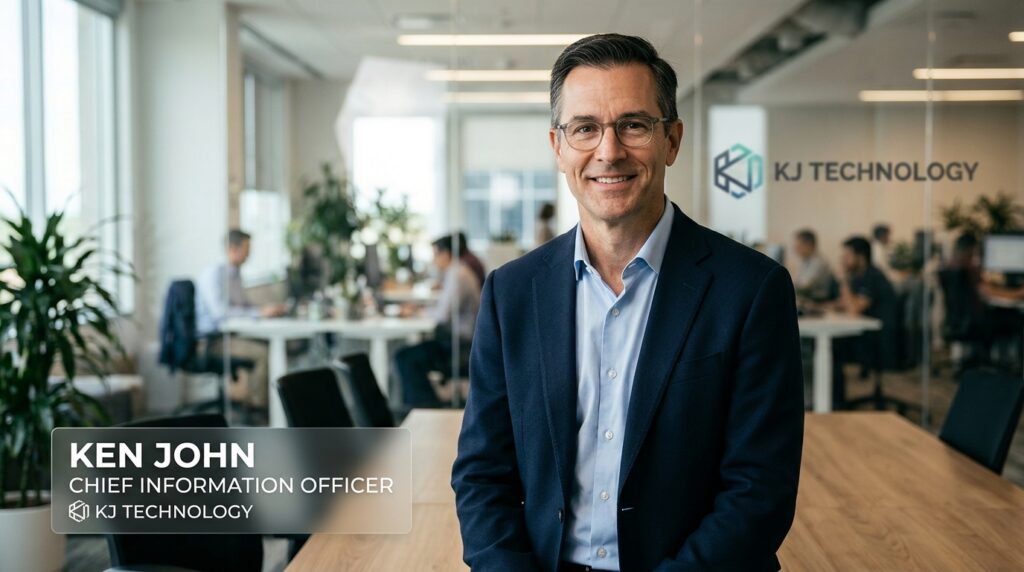
This is where the conversation around Ken John, CIO, and KJ Technology becomes interesting. The relationship between technology leadership and business success highlights an important principle: technology should do more than keep operations running. It should create opportunities, strengthen security, and help organizations move forward with confidence.
KJ Technology operates in the managed IT services and technology consulting industry, providing businesses with solutions designed to improve infrastructure, cybersecurity, cloud operations, and strategic IT planning. Its approach reflects the growing importance of combining technical expertise with a clear understanding of business priorities.
Understanding Ken John and KJ Technology
When people search for Ken John CIO KJ Technology, they are generally looking for information connecting technology leadership, professional expertise, and the company behind the name.
Ken John appears among the employees associated with KJ Technology on the company’s LinkedIn profile. However, publicly available company leadership information does not independently confirm his specific position as Chief Information Officer. It is important to distinguish verified professional information from assumptions when discussing individuals in the technology industry.
KJ Technology itself has an established presence in the IT services and consulting sector. Founded in 1998, the company has developed its business around helping organizations manage technology, improve security, and make better decisions about their IT infrastructure.
Its services extend beyond traditional technical support. The company emphasizes strategic planning, managed IT services, cybersecurity, cloud computing, business continuity, and advisory support.
This broader approach demonstrates how modern technology companies can become valuable business partners rather than simply providers of computer repairs and troubleshooting.
Why Technology Leadership Matters in Modern Business
A successful business needs more than functioning computers and internet connectivity. It requires a coordinated technology strategy that supports everyday activities while preparing the organization for future challenges.
Technology leadership helps establish that direction.
A capable technology leader considers several important questions:
- Are existing IT systems supporting business objectives?
- Are company networks and digital resources adequately protected?
- Can employees access the tools they need without unnecessary complications?
- Are technology investments delivering measurable business value?
- Is the organization prepared for unexpected technical disruptions?
These questions are essential because technology decisions often affect every department.
For example, an outdated network can slow down communication, reduce productivity, and create security vulnerabilities. Similarly, poorly managed cloud applications can introduce unnecessary costs and make information management more complicated.
A strategic approach helps organizations identify these issues before they become expensive problems.
KJ Technology: More Than Traditional IT Support
KJ Technology positions itself as a business-focused managed IT services provider. Rather than concentrating exclusively on resolving technical problems, its approach emphasizes building long-term relationships and helping clients make informed technology decisions.
The company’s service philosophy centers on transparency, accountability, continuous improvement, and customer advocacy.
These principles are particularly relevant in an industry where businesses frequently face complicated technical decisions.
A company may need to replace outdated equipment, strengthen its cybersecurity defenses, migrate applications to the cloud, or develop a more reliable disaster recovery strategy. Each decision requires an understanding of the organization’s existing environment and future requirements.
KJ Technology’s services are designed to address these different needs through a combination of technical support and strategic guidance.
Managed IT Services and Business Productivity
Managed IT services have become an important part of modern business operations.
Instead of waiting for computers, networks, or applications to fail, organizations can work with an external IT provider to maintain their systems proactively.
This approach can help businesses reduce downtime, improve operational consistency, and manage technology expenses more effectively.
KJ Technology offers managed IT services that include infrastructure management, ongoing technical support, and proactive maintenance.
Some important benefits of managed IT services include:
1. Proactive IT Maintenance
Regular monitoring and maintenance help identify potential problems before they interrupt business operations.
This may involve checking system performance, reviewing network activity, managing updates, and addressing equipment issues.
2. Improved Technical Support
Employees need dependable access to technology to complete their daily responsibilities.
Professional IT support helps resolve technical problems while minimizing interruptions to normal business activities.
3. Better Technology Planning
Managed IT services can also provide organizations with a clearer understanding of their technology requirements.
Businesses can plan equipment replacements, software improvements, and infrastructure upgrades according to their operational priorities.
4. More Predictable IT Management
A structured support arrangement can make it easier to understand technology responsibilities, plan maintenance, and manage recurring IT expenses.
Ultimately, managed IT services allow business owners and employees to concentrate more fully on their primary responsibilities.
Cybersecurity: Protecting Businesses in a Digital Environment
Cybersecurity is one of the most important considerations for organizations operating in today’s connected economy.
Businesses regularly handle confidential customer information, financial records, employee details, intellectual property, and internal communications. Without appropriate protection, these resources may become vulnerable to cyberattacks and unauthorized access.
KJ Technology offers cybersecurity services designed to help businesses strengthen their digital defenses.
Its publicly listed capabilities include security monitoring, endpoint detection and response, perimeter security, Zero Trust approaches, and security leadership through CISO-as-a-Service offerings.
These services address different aspects of business security.
For example, endpoint protection helps organizations monitor and protect computers and other connected devices. Identity and access management helps ensure that individuals have appropriate access to company systems.
Security monitoring adds another layer of visibility by helping identify suspicious activity that may require investigation.
However, cybersecurity is not simply about installing security software. It also involves employee awareness, appropriate policies, regular assessments, and a clearly defined response plan.
A comprehensive security strategy combines people, processes, and technology to reduce organizational risk.
The Importance of Strategic IT Consulting
Technology investments should always have a clear purpose.
Businesses sometimes purchase new applications or equipment because a particular solution appears attractive. Unfortunately, technology that does not address an actual operational need can create unnecessary complexity and expenses.
Strategic IT consulting helps organizations avoid this situation.
KJ Technology provides virtual Chief Information Officer, or vCIO, services that bring high-level technology planning and business-focused guidance to organizations.
A virtual CIO can help business leaders evaluate their current technology environment, identify improvement opportunities, and establish priorities for future investments.
Typical areas of strategic IT consulting include:
- Technology assessments and infrastructure reviews.
- Long-term IT planning and budgeting.
- Cloud adoption and migration strategies.
- Business process improvement.
- Technology risk management.
- Vendor and service evaluation.
- Alignment between IT investments and business objectives.
One significant advantage of the vCIO model is that businesses can access strategic technology guidance without necessarily employing a full-time Chief Information Officer.
This can be especially useful for growing organizations that need experienced IT leadership but do not require a permanent executive technology department.
Cloud Computing and the Changing Workplace
Cloud computing has changed how organizations store information, communicate, and manage business applications.
Employees can collaborate across different locations, access authorized resources remotely, and use applications without depending entirely on traditional office-based infrastructure.
However, successful cloud adoption requires proper planning.
Organizations must consider data security, user permissions, application compatibility, ongoing expenses, and business continuity.
KJ Technology includes cloud computing, cloud management, and strategic cloud migration among its service areas.
A well-planned cloud environment can offer several advantages:
Greater flexibility: Employees can access approved business resources from different locations.
Improved collaboration: Cloud-based applications make it easier for teams to share information and work together.
Scalability: Businesses can adjust their technology resources as operational requirements change.
Centralized management: Appropriate cloud management practices can improve visibility and control over digital resources.
Nevertheless, moving everything to the cloud is not automatically the right decision. Each organization should evaluate its applications, security requirements, compliance obligations, and budget before choosing an approach.
Business Continuity and Disaster Recovery
Technology disruptions can happen unexpectedly.
Hardware failures, cyberattacks, accidental data deletion, power interruptions, and other incidents can affect business operations.
Without proper preparation, even a relatively small technical issue can develop into a significant operational challenge.
Business continuity planning focuses on keeping essential business functions operating during unexpected disruptions.
Disaster recovery, meanwhile, concentrates on restoring IT systems, applications, and information after an incident.
Both are important components of a reliable technology strategy.
KJ Technology includes business continuity solutions and planning among its services.
A practical business continuity strategy should address:
- Identifying critical business systems and processes.
- Understanding potential operational risks.
- Establishing backup and recovery procedures.
- Assigning responsibilities during an incident.
- Testing recovery plans regularly.
- Reviewing and improving procedures as the business changes.
Having a plan is important, but testing that plan is equally essential.
Organizations should know whether their backups can actually be restored and how long essential systems would take to become operational again.
Preparation creates greater confidence when unexpected situations occur.
The Human Side of Technology Management
Technology is often discussed in terms of software, hardware, networks, and cybersecurity tools. Yet people remain at the center of every successful technology environment.
Employees need systems that are understandable, dependable, and appropriate for their responsibilities.
Business leaders need accurate information to make decisions. Customers expect reliable communication and consistent service.
This is why communication and customer service matter so much in the IT industry.
KJ Technology emphasizes transparency and candor, explaining technical concepts in straightforward language rather than relying on complicated terminology.
This approach is valuable because technology decisions should not be limited to technical specialists.
Business owners and managers need to understand why a recommendation matters, what problem it addresses, and how it supports organizational goals.
When IT professionals communicate clearly, they make it easier for clients to participate in important decisions.
What Businesses Should Look for in a Technology Partner
Choosing an IT provider is an important business decision. The right partner should understand the organization’s current requirements while helping it prepare for future developments.
There are several factors worth considering when evaluating a managed IT services provider.
Experience and Technical Knowledge
A reliable provider should understand business networks, cloud environments, cybersecurity, infrastructure management, and modern workplace technologies.
Industry experience can also help when organizations operate under specific regulatory or compliance requirements.
Clear Communication
Technical recommendations should be explained in practical language.
Clients should understand what services they receive, what responsibilities the provider manages, and how technical decisions affect business operations.
Proactive Support
Waiting until something breaks is rarely the best technology management strategy.
Businesses should look for providers that emphasize monitoring, maintenance, security reviews, and long-term planning.
Security Awareness
Cybersecurity should be an ongoing priority rather than an occasional project.
A dependable technology partner should understand access controls, endpoint protection, security monitoring, employee awareness, and incident response.
Long-Term Partnership
Technology requirements change as businesses grow.
An effective IT provider should be able to adapt its recommendations and services as the organization develops.
These considerations help businesses evaluate technology providers according to more than price alone.
The Future of IT Leadership and Business Technology
The technology industry continues to evolve, creating new opportunities and challenges for organizations of every size.
Artificial intelligence, cloud platforms, automation, advanced cybersecurity tools, and hybrid working environments are changing how companies operate.
However, adopting new technology simply because it is popular does not guarantee better results.
Businesses need to understand how emerging solutions fit their objectives, security requirements, and existing infrastructure.
Artificial intelligence, for example, can help automate repetitive activities and improve access to information. At the same time, organizations must consider data privacy, governance, accuracy, and appropriate employee use.
Cloud platforms can improve flexibility, but they also require thoughtful access management and cost oversight.
Cybersecurity solutions continue to become more advanced, yet employee awareness and sound security policies remain essential.
The organizations most likely to benefit from these developments are those that combine innovation with responsible planning.
This is where experienced IT consulting and strategic technology leadership can make a meaningful difference.
Why KJ Technology’s Business-Focused Approach Matters
KJ Technology’s approach reflects an important development in the managed IT services industry.
Businesses increasingly expect technology providers to understand more than technical troubleshooting. They want partners who can help them evaluate risks, prioritize investments, improve processes, and prepare for growth.
The company’s emphasis on transparency, customer advocacy, and continuous improvement supports this relationship-focused approach.
Its combination of managed IT services, cybersecurity, cloud management, business continuity, and virtual CIO consulting provides organizations with access to several important areas of technology expertise.
For companies that want a more organized approach to IT management, this type of partnership can help create a stronger foundation for daily operations and future development.
Final Thoughts on Ken John, CIO, and KJ Technology
The conversation surrounding Ken John, CIO, and KJ Technology connects with a broader question facing modern businesses: how can technology become a genuine advantage rather than simply another operational responsibility?
The answer begins with thoughtful leadership, reliable infrastructure, effective cybersecurity, and a clear understanding of business priorities.
KJ Technology demonstrates how managed IT services and strategic technology consulting can work together to support these objectives.
From proactive IT support and cloud management to cybersecurity and virtual CIO services, its offerings address many of the challenges organizations encounter in an increasingly digital business environment.
Ultimately, successful technology management is about creating systems that help people work better, protect valuable information, and support sustainable business growth.
As technology continues to advance, organizations that prioritize strategic planning and dependable IT partnerships will be better positioned to adapt, innovate, and move forward with confidence.